
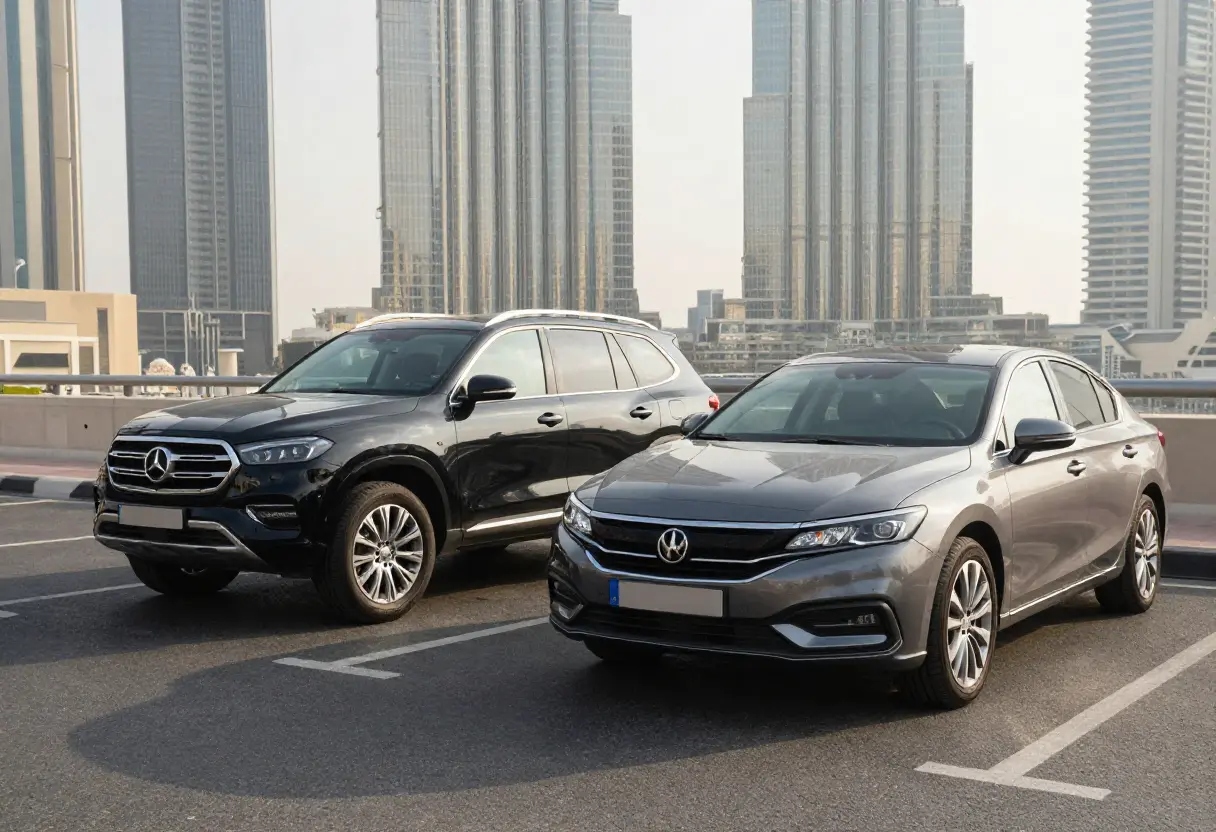
You’ve probably had this conversation at the dealership, over lunch, or in the comments section of a YouTube video. Sedan or SUV? It’s one of the most common car-buying debates in the UAE — and honestly, it doesn’t have one clean answer.
What it does have is context. And in the UAE, context changes everything.
Between the smooth six-lane highways of Dubai, the narrow older streets of Deira, the scorching summer heat, fuel realities, and the social culture around cars, your “daily driver” here faces conditions that are genuinely different from other markets. So instead of giving you a generic comparison, let’s look at this through a UAE lens — practically, honestly, and without the fluff.
The UAE Driving Reality Most Guides Ignore
Before we get into specs and price tags, here’s the thing most car comparison articles skip over: how most people in the UAE actually drive.
The majority of daily commuters in Dubai, Abu Dhabi, and Sharjah are doing one thing — highway cruising. Long stretches, moderate to heavy traffic, and the occasional aggressive lane changer. The roads are wide, well-maintained, and flat. Off-road? Unless you’re heading to Hatta, Liwa, or into the dunes on a Friday adventure, it’s rarely part of your weekday.
This matters because it immediately narrows the “practical SUV advantage” that people assume they’re getting.
Sedans in the UAE: Still a Strong Case
Sedans get unfairly dismissed as “boring” in a market where big and boxy often signal status. But if you strip away the perception and look at pure daily driving logic, they hold up well.
Fuel Efficiency on UAE Roads
On a highway-heavy commute — say, Abu Dhabi to Dubai — a well-maintained sedan will consistently beat an SUV of comparable engine size on fuel consumption. With UAE petrol prices fluctuating monthly and ADNOC fuel costs climbing since subsidies were restructured, this gap adds up over a year. A mid-size sedan averaging 11–13 km/L versus an SUV averaging 8–10 km/L means a meaningful difference at the pump.
If you’re driving 1,500+ km a month (not unusual in the UAE), that saving is real money.
Parking and Manoeuvrability in Older Districts
Try parking a large SUV in the older commercial areas of Deira, Al Satwa, or parts of Sharjah’s Rolla Square. The roads are narrower, the bays are tighter, and reversing a long wheelbase vehicle in a crowded lane is a daily frustration. Sedans win here — decisively.
Ride Comfort at Speed
Most people don’t realise that sedans — particularly German and Japanese mid-range sedans — have a lower centre of gravity than SUVs. At the speeds common on UAE highways (and we all know what speeds we’re talking about), this translates to sharper handling and a more planted feel. On a long Abu Dhabi–Dubai–Sharjah triangle, that stability makes a difference to driver fatigue.
Popular sedan choices in the UAE: Toyota Camry, Honda Accord, Nissan Altima, Mercedes C-Class, and the ever-reliable Hyundai Sonata. You can explore current pricing and availability for these models on Shayar.ae’s sedan listings.
SUVs in the UAE: Where They Actually Earn It
Now for the honest SUV argument — not the inflated version.
Family Practicality
UAE families tend to be larger, and the culture around family outings — from weekend brunches to trips between emirates — often means five or more people in the car. An SUV’s third-row option (in 7-seaters) or wider rear seating in 5-seaters is a genuine quality-of-life upgrade when you’re doing school runs and mall trips with children regularly.
Boot space also matters. If you’re the type to load up at Carrefour or LuLu Hypermarket and have furniture or stroller situations to manage, an SUV’s cargo area is simply more practical.
Air Conditioning Performance
Here’s a nuance almost nobody talks about: in a UAE summer, cabin cooling speed matters. A car that’s been sitting in an outdoor parking lot at 50°C needs powerful AC and fast cabin temperature recovery. While modern sedans have improved their HVAC systems, the larger cabin volume of an SUV typically comes with more powerful climate systems designed for Gulf conditions — particularly in newer GCC-spec vehicles from Toyota, Nissan, and Kia.
Weekend Off-Road Culture
The UAE’s off-road and dune driving scene is not niche — it’s a proper weekend lifestyle for thousands of residents. From Al Badayer dunes in Sharjah to the tracks around Al Ain, if this is even a monthly activity for you, a crossover or SUV with 4WD is the practical choice. Driving a FWD sedan onto soft sand is an expensive mistake.
Ground Clearance in Unusual Situations
The occasional flooded underpass during rare UAE rainstorms (remember the April 2024 floods?), the raised entry to certain villa compounds, or gravel tracks near desert campsites — SUVs handle these without drama. Sedans can, too, but with more care.
Popular SUV choices in the UAE: Toyota Land Cruiser, Nissan Patrol, Kia Sportage, Hyundai Tucson, Toyota RAV4, and the Toyota Fortuner. Browse through Shayar.ae’s SUV listings for updated prices and specs in the UAE market.
The Cost Comparison: What You’re Actually Paying
The purchase price gap between a mid-range sedan and a comparable SUV typically ranges between AED 15,000 and AED 40,000, depending on brand and spec. Over a 4-year ownership period, that difference compounds when you factor in:
• Insurance premiums — SUVs carry higher third-party and comprehensive premiums in the UAE
• Tyre costs — Larger tyres on SUVs are more expensive to replace; UAE roads and heat wear tyres faster than temperate climates
• Fuel bills — Already covered above, but worth repeating: this is a monthly cost, not a one-off
• Resale value — Here’s where it gets interesting
The Resale Wildcard
In the UAE secondhand market, certain SUVs retain value better than sedans — particularly Japanese brands. A used Toyota Land Cruiser or Nissan Patrol holds its price remarkably well compared to a sedan of equivalent age. If you plan to sell within 3–4 years, an SUV might be worth the higher upfront cost.
That said, Japanese sedans like the Camry and Accord also hold value well in the UAE used car market. Check Shayar.ae’s used cars section to compare current asking prices on secondhand options — it’s the fastest way to understand real market value.
Who Should Buy a Sedan in the UAE?
• Solo commuters or couples without children
• Daily highway drivers where fuel efficiency compounds over time
• Anyone driving regularly in older, denser urban areas
• Drivers who prioritise a sharp, responsive driving experience
• Budget-conscious buyers wanting lower total ownership cost
Who Should Buy an SUV in the UAE?
• Families with children, especially those with a third-row requirement
• Anyone who participates in weekend desert or mountain driving
• Drivers who regularly travel between emirates with passengers
• Buyers prioritising resale value and long-term market demand
• Those who want the commanding visibility of a higher seating position — which, in UAE traffic, has genuine practical value
Conclusion
Neither choice is wrong. But one is probably more right for your life in the UAE.
If your day is a straight line from apartment to office to supermarket and back — on highways, in modern parts of the city — a sedan is likely the smarter financial decision. Lower running costs, easier parking, and almost no practical disadvantage on your actual routes.
If your life involves a family, a weekend off-road habit, frequent trips across emirates with a full car, or you simply place high value on SUV resale dynamics in this specific market, an SUV earns its cost.
The trap to avoid is buying an SUV for status or “just in case” off-road capability you’ll never use. That decision costs you thousands of dirhams a year in fuel, insurance, and depreciation.
Know your actual lifestyle. Then match your car to it.
Ready to start comparing? Explore both sedan and SUV options on Shayar.ae — with updated UAE market pricing, specs, and listings for new and used vehicles.