
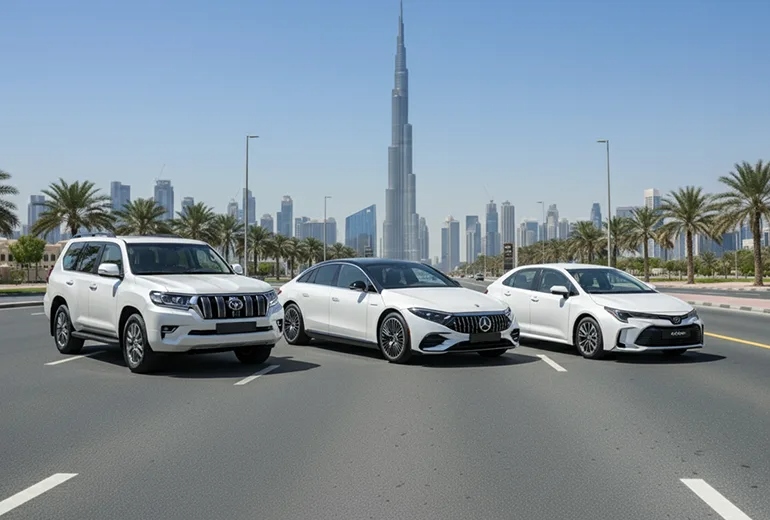
Dubai moves fast. Whether you're heading to a business meeting in DIFC, exploring the dunes on a Friday morning, or simply tired of waiting for a cab outside a mall, having your own wheels changes everything. Renting a car here is straightforward — but only if you know what to expect. This guide walks you through everything, from picking up at the airport to finding the best deal in your neighbourhood.
Why Renting a Car in Dubai Makes Sense
Public transport in Dubai is clean and reliable, but it doesn't always take you where you actually need to go. The metro stops at major hubs; the rest of the city — Jumeirah, Al Quoz, Mirdif, the industrial areas — is best navigated by road.
Car hire Dubai is remarkably affordable compared to most major cities. With fuel prices kept low and a highly competitive rental market, you can drive a decent sedan for less than what you'd spend on ride-hailing over a week. For residents especially, long-term rental often makes more financial sense than leasing or buying.
Whether you're visiting for a week or settling in for months, the process is easier than most people assume — and with a few insider tips, you can avoid the common traps.
Renting a Car at Dubai Airport: What You Need to Know
Most tourists land at Dubai International Airport (DXB) and head straight to the rental counters on the arrivals floor. It's convenient, but not always the cheapest option. Airport counters carry a premium, and during peak season — October through March — availability can be tight if you haven't pre-booked.
If you want to rent a car Dubai airport, book online at least 48 hours in advance. Compare rates across providers, read the excess insurance terms carefully, and check whether the quoted price includes the mandatory CDW (Collision Damage Waiver). Many travellers are caught off guard by this at the counter.
What documents do you need?
- A valid passport
- Your home country's driving licence
- An International Driving Permit (IDP) if your licence isn't in English or Arabic
- A credit card in the primary driver's name (debit cards are often rejected for the security deposit)
EU, US, UK, and GCC licences are generally accepted without an IDP. If you're unsure, check with your rental provider before you travel — it saves a lot of stress on arrival.
Pro tip: If your flight lands late at night, confirm the rental desk's operating hours in advance. Some counters close after midnight and reopen early morning.
Picking Up at Al Maktoum Airport: The Quieter, Smarter Option
Dubai World Central — better known as Al Maktoum International Airport — handles a growing volume of traffic, particularly charter and low-cost carriers. If you're flying into this terminal, you'll want to arrange car hire at Al Maktoum Airport before you land.
Unlike DXB, Al Maktoum is located in the Jebel Ali area, which puts you south of the city and closer to Dubai South, Expo City, and the industrial zones. For business travellers heading to that part of Dubai, this is actually ideal — you skip the traffic entirely.
The rental infrastructure here is smaller than at DXB, so options at the terminal itself are more limited. Many rental companies operate off-site and offer a free shuttle or drop-off service.
Renting a Car in Barsha: A Central Base for Exploration
Al Barsha sits right in the middle of Dubai. It's walkable to the Mall of the Emirates, close to Sheikh Zayed Road, and well-connected to the rest of the city by both road and metro. It's also home to a dense cluster of car rental offices, which makes it one of the most popular spots for both residents and tourists to arrange wheels.
If you're looking to rent a car Barsha, you'll find everything from budget hatchbacks to premium SUVs within a short radius. Prices here are often more competitive than airport counters, and the process tends to be quicker since you're not dealing with airport queues.
Many residents use Barsha rental offices for monthly or weekly hires — it's a practical hub.
What type of car should you rent?
- Compact/Sedan — Best for city driving. Easy to park, fuel-efficient, and comfortable for two to three passengers.
- SUV — Ideal if you're heading to Hatta, the desert, or carrying luggage for a group.
- Luxury vehicles — Popular for business visits or special occasions. Ferrari, Mercedes, and Range Rover are all widely available for short-term hire.
- 7-seater MPV — Perfect for families or group travel.
Understanding the Costs: What You'll Actually Pay
The daily rate is just one number. Here's what can add to your bill:
Insurance excess: CDW typically reduces your liability, but the excess (your portion of any claim) can still be AED 1,500–3,000. You can often buy this down to zero with a full coverage upgrade — worth it for nervous drivers or unfamiliar roads.
Salik toll charges: Dubai uses an electronic toll system called Salik. Your rental car will already have a Salik tag fitted. Charges are deducted automatically and billed to you at the end of the rental. Budget an extra AED 20–50 per day if you're using toll roads regularly.
Fuel policy: Most rentals in Dubai operate on a full-to-full basis — you pick up the car full and return it full. Petrol stations are everywhere and fuel is cheap, so this is rarely an issue.
Traffic fines: Any fines incurred during your rental period are your responsibility. Speed cameras are everywhere in Dubai, and the limits are strictly enforced. Stick to posted limits, especially on Sheikh Zayed Road and Emirates Road.
Driving in Dubai: Practical Tips for First-Timers
Getting behind the wheel in Dubai for the first time can feel intimidating — the roads are wide, fast, and filled with confident drivers. A few things to keep in mind:
Driving is on the right side of the road. If you're from the UK, Australia, or India, this will need a conscious adjustment, especially at roundabouts.
Lane discipline is taken seriously. The right lane is for slower traffic; the left lane is for overtaking. Sitting in the fast lane at 100 km/h will earn you flashing headlights.
Navigation: Google Maps and Waze both work brilliantly in Dubai. Waze is particularly good for live traffic updates. Download your map offline before you land in case of connectivity issues.
Parking: Dubai Mall and most major malls have free or low-cost parking, though it can fill quickly on weekends. RTA-managed street parking uses a paid system in busier areas — look for the blue parking zones.
Residents vs. Tourists: Key Differences
For tourists, the process is straightforward — a foreign licence and a valid passport get you on the road quickly. Just confirm your IDP situation and pre-book to secure the best rate.
For UAE residents, you'll need your Emirates ID and a UAE driving licence (converted from your home country licence). Residents often benefit from lower long-term rates and can access monthly subscription models that include insurance and maintenance — effectively a hassle-free alternative to car ownership.
Final Word
Dubai rewards people who move on their own terms. Whether you're landing at DXB and need a car at the airport, flying into Al Maktoum and heading south, or simply looking for a reliable car rental Barsha office near your hotel, the options are there. Book ahead, understand your insurance, and keep Waze running. The rest takes care of itself.