
Most people don't realise they've been overcharged on a car rental until they're back home, staring at a bank statement that doesn't add up. A rate that looked like AED 150/day somehow settled at AED 230. The difference? Charges that were buried — not hidden exactly, just quietly left unexplained.
If you're planning to rent a car in Abu Dhabi for the first time, this guide is worth reading before you book anything. We'll walk you through exactly what to watch for, how tolls work, and how to walk away paying only what you agreed to.
Why Abu Dhabi Is Different from Dubai (for Renters)
Abu Dhabi and Dubai share a lot — but their toll systems, traffic rules, and rental norms have key differences that catch first-timers off guard.
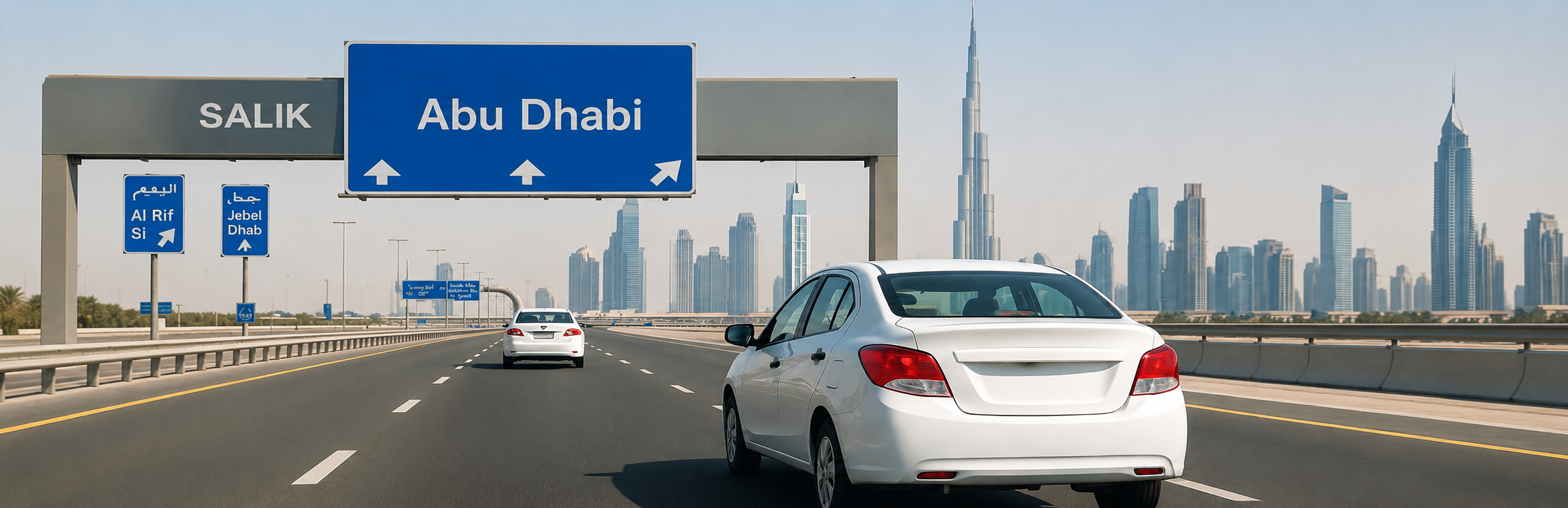
Dubai uses Salik, a single electronic toll system. Abu Dhabi runs a separate system called Darb, which operates differently. Darb charges apply only during peak hours — typically 7 am to 9 am and 5 pm to 7 pm — and only at designated toll points across the Abu Dhabi road network.
This matters because some rental companies bundle Darb charges into a flat daily fee regardless of whether you actually use the tolled roads. Others bill you separately at the end of your rental. Neither approach is wrong — but you need to know which one applies to your booking before you sign anything.
The Hidden Fees That Trip Up First-Time Renters
Here's a breakdown of charges that regularly appear on final invoices without being clearly communicated at the point of booking:
1. Toll Surcharges As mentioned, Darb toll charges for car hire in Abu Dhabi can be billed as a flat daily admin fee or passed through at actual cost. Some companies charge a processing fee on top of the tolls themselves — an extra AED 5–10 per transaction. Ask specifically: "How are Darb tolls billed, and is there an admin fee?"
2. Insurance Gaps Standard rental agreements include basic Collision Damage Waiver (CDW). What many renters don't check is whether the CDW covers single-vehicle accidents, windscreen damage, or tyre damage. It often doesn't — these fall under optional add-ons that get added at pick-up when you're in a hurry.
3. Fuel Policy "Full to full" is the most customer-friendly policy. You collect a full tank, return it full, and pay only for what you use. Some companies use a "full to empty" policy — you pay for a full tank upfront and return it on whatever's left. That leftover fuel isn't refunded. Always confirm which policy applies.
4. Late Return Penalties A 30-minute grace period sounds reasonable until you're stuck in Abu Dhabi traffic on the way back. Some rental companies charge a full extra day for returns even one hour late. Know the policy — and if possible, build buffer time into your return window.
5. Cross-Emirate Restrictions Not all rental agreements allow you to drive into other Emirates. If you're picking up a car in Abu Dhabi and plan to drive to Dubai, Ras Al Khaimah, or Fujairah, confirm this is permitted. Unauthorised cross-emirate travel can void your insurance entirely.
How to Read a Rental Agreement (Without a Law Degree)
You don't need to scrutinise every clause — just focus on these sections:
· Insurance coverage and exclusions – What's covered, what isn't, and what your excess liability is
· Toll billing method – Flat daily fee vs. actual usage
· Fuel policy – Full-to-full or full-to-empty
· Mileage limits – Unlimited mileage is the norm in the UAE, but confirm it
· Return conditions – Timing grace period and late return charges
· Permitted driving zones – Whether cross-emirate travel is included
A reputable rental company will answer these questions clearly before you sign. If any of them are met with vague responses, treat that as a signal.
Weekly vs Monthly Car Rental in Abu Dhabi — Which Makes More Sense?
The answer depends entirely on how long you're staying and what you need the car for.
Weekly car rental in Abu Dhabi suits people visiting for 5–10 days — business travellers, families on holiday, or anyone who needs a vehicle without a long-term commitment. Weekly rates typically represent a 10–20% discount over daily pricing, bundled into a single clean rate.
Monthly car rental in Abu Dhabi is the smarter choice for residents between vehicles, expatriates on extended assignments, or anyone who regularly travels between Abu Dhabi and Dubai. The economics shift significantly at the monthly level — a cheap monthly car rental in Abu Dhabi from a reliable provider can work out to roughly AED 80–120 per day depending on the vehicle class, compared to AED 150–200+ on short-term daily rates.
If you're spending more than three weeks in Abu Dhabi, the monthly option almost always wins on value.
Documents you’ll Actually Need
Abu Dhabi car hire requirements are broadly the same as the rest of the UAE:
UAE Residents:
· Valid UAE driving licence
· Emirates ID
· Credit or debit card for deposit
Tourists:
· Valid passport with UAE tourist visa
· International driving permit (or a licence from an eligible country — check with the rental company)
· Credit or debit card
One thing to sort out early: the deposit. Many companies hold a card deposit at pick-up, ranging from AED 500 to AED 2,000 depending on the vehicle. This is released after return and inspection — timelines typically run 15–30 days, depending on your bank. Budget for this when you're planning.
How to Avoid Overpaying — Practical Checklist
Before you confirm any booking for car rental Abu Dhabi, run through this:
· Confirm toll billing method (Darb — flat fee vs. actual usage)
· Confirm CDW covers windscreen, tyres, and underbody
· Confirm fuel policy is full-to-full
· Confirm mileage is unlimited
· Confirm cross-emirate driving is permitted if you need it
· Ask about the return grace period
· Check the deposit amount and refund timeline
Print the agreement or save a PDF copy before you leave the counter. If there's a dispute later, you'll want the original documentation.
Choosing the Right Car for Abu Dhabi
Abu Dhabi roads are wide, well-maintained, and largely flat. For city use — Corniche, Khalidiyah, Yas Island, the business district — a compact sedan handles everything comfortably. If you're heading toward Al Ain, the Eastern Ring Road, or out toward the desert, a mid-size SUV gives you more clearance and confidence.
Browse the full fleet at Shayar to compare options across economy, compact, SUV, and premium categories — including 2025 models from Toyota, Kia, Hyundai, MG, and more.
One More Thing: Booking in Advance Still Matters
Walk-in rates at rental desks — whether at Abu Dhabi International Airport or at city branches — are almost always higher than what's available online. Booking 24–48 hours ahead consistently returns better pricing, and it means your vehicle is confirmed rather than subject to availability.
For longer rentals, the lead time matters even more. The monthly car rental in Abu Dhabi inventory fills up, particularly for economy and compact vehicles that offer the best per-day value.
Whether you need a car for a week or a month, understanding what you're actually paying for is the difference between a smooth rental experience and an unpleasant surprise at the end of your trip. Check current offers and available vehicles at Shayar — transparent pricing, no hidden charges, and delivery available across the UAE.